
How Cloud Skills Boost Your IT Career
Cloud skills have become one of the most reliable ways to expand your career options in IT. Not because every job is a “cloud job,” but because cloud concepts now show up everywhere. Whether you work in support, networking, security, or systems administration, cloud knowledge changes how you troubleshoot problems, how you design solutions, and how you talk about business impact.
 The most important mindset shift is understanding that the cloud is not a separate universe. It is the same core fundamentals, compute, storage, networking, identity, security, and monitoring, delivered through a different operating model. When you learn cloud, you are not abandoning traditional IT; you are learning how modern IT is built and operated at scale.
One of the biggest things cloud skills unlock is broader problem solving. Entry-level IT roles often focus on a single device or a single user. Cloud experience pushes you to think in systems instead. You start asking better questions: where is the workload running, how is traffic flowing, where do the logs live, what identity controls access, and what happens when something fails. That systems-level thinking is what separates reactive support from proactive engineering.
 Cloud skills also sharpen your security instincts. In cloud environments, permissions and identity are impossible to ignore. You are forced to think about least privilege, access policies, key management, and auditing from the start. Over time, those habits become second nature, and they translate directly into stronger performance in security-focused, compliance, and risk-aware roles.
Another major benefit is automation and efficiency. Cloud platforms are designed for repeatable, consistent deployment. Even basic hands-on practice nudges you toward templates, scripts, and standardized configurations. That mindset is the same foundation used in DevOps, platform engineering, and SRE-style roles, even if your current job title has nothing to do with those areas.
When deciding what to learn first, it helps to focus on fundamentals that transfer across platforms and roles. Virtualization is a natural starting point, understanding what virtual machines are, how images work, and why abstraction matters. Solid networking foundations come next, including subnets, routing, DNS, and basic firewall rules. Cloud networking becomes far less intimidating when the underlying concepts are already familiar.
Identity and access management is one of the fastest ways to increase your value in almost any IT role. Knowing how accounts, roles, policies, and multi-factor authentication fit together pays off immediately. From there, it makes sense to learn storage and data movement, such as the difference between block and object storage, backup strategies, and lifecycle policies. Finally, monitoring and logging tie everything together by showing you where metrics and logs live and how to use them to troubleshoot real issues.
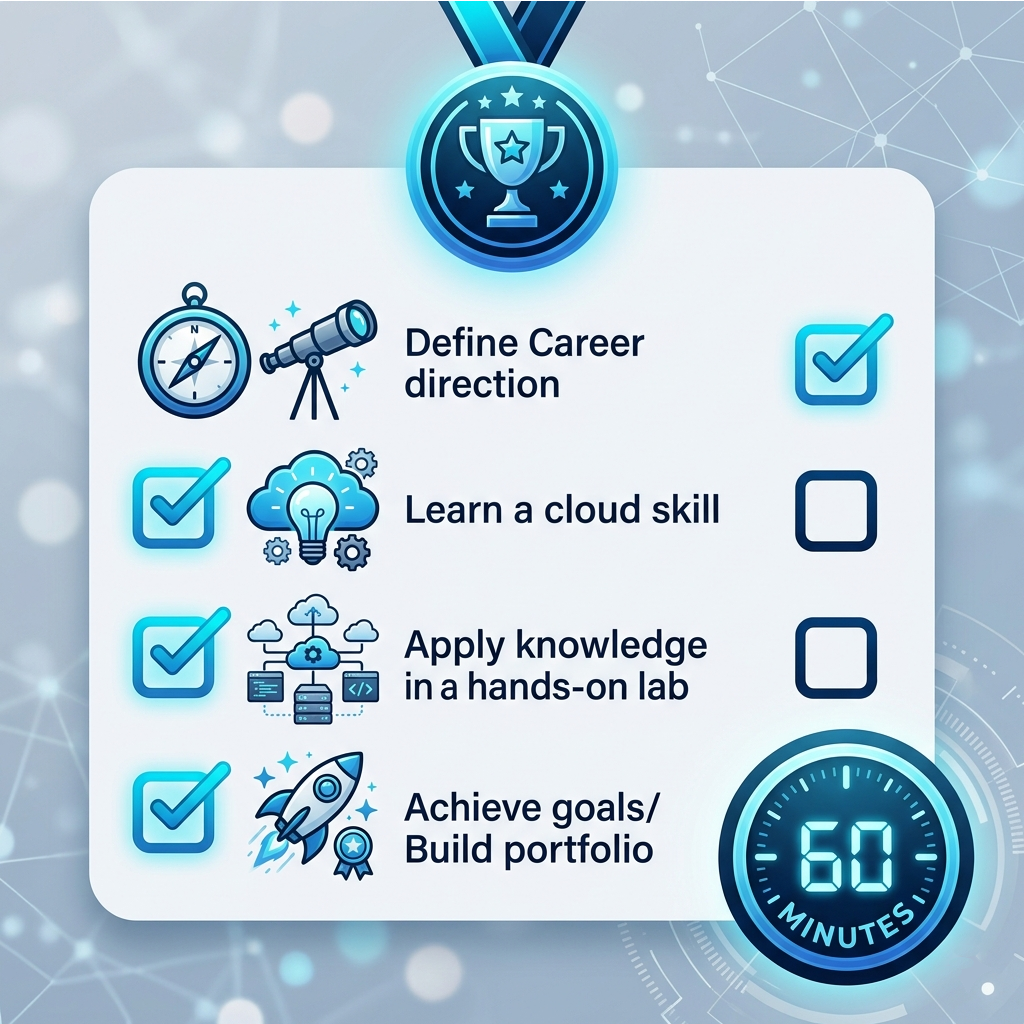 When it comes to proving cloud skills, expensive projects are not required. The strongest resume line is rarely a certification name by itself; it is a small, well-understood project you can confidently explain. A simple portfolio pattern works well: deploy one virtual machine, lock down access, enable logging, add a basic monitoring alert, and document what you did and why. If you can clearly explain your decisions, you are already practicing the same thinking used in real-world roles.
Cloud skills are not about chasing trends or memorizing services. They are about learning how modern systems are designed, secured, and operated. When you approach cloud learning with that perspective, you are not just preparing for a specific job, you are building a foundation that stays relevant as your career grows.
Talk to you next week.