
Endpoint Security in 2026: What Attackers Target and How to Stop Them
 Endpoints are the most targeted layer in modern IT infrastructure. Every laptop, smartphone, server, and smart device connected to a network represents a potential entry point for attackers. In 2026, endpoint security is not optional, it is the foundation of every effective cybersecurity strategy. This post breaks down the five biggest threats targeting endpoints today and the tools IT pros use to stop them.
The first threat is malware. After nearly four decades of tracking IT problems, the pattern is clear: more than half of every issue on individual computers and networks traces back to malicious software. Malware is any software that harms the operation of a host. It includes viruses, trojans, ransomware, spyware, and remote access trojans. Understanding what malware is and how it behaves is the starting point for endpoint defense.
The second threat is botnets. A botnet is a network of infected machines, each called a bot or zombie, all under the control of a single malicious actor. What makes botnets particularly dangerous is their communication model: infected machines reach out to the attacker’s command and control server, which means traditional inbound firewall rules do not stop them. The attacker never needs to break in. The infected endpoint does the work.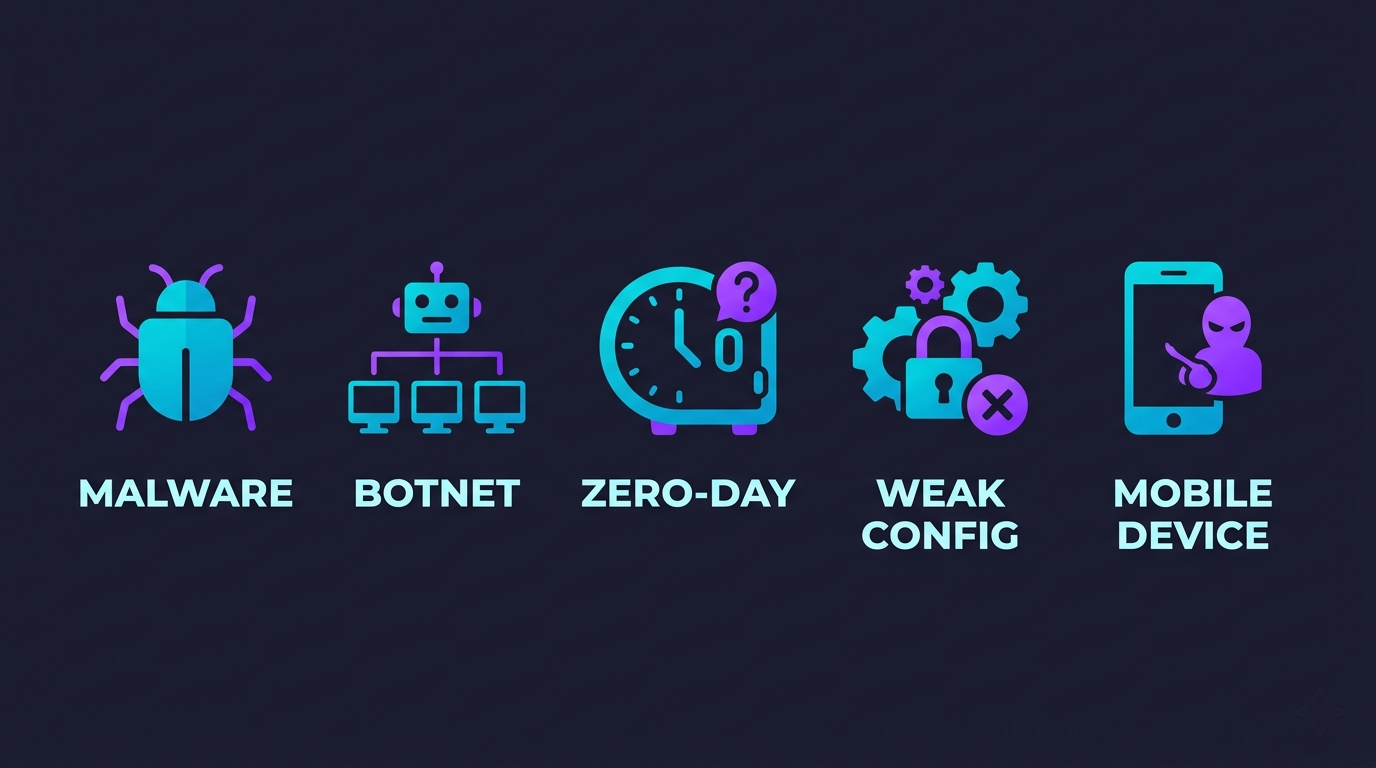
The third threat is zero-day attacks. A zero-day vulnerability is one that has not been discovered by, or disclosed to, the software vendor. That means no patch exists. When attackers find and exploit a zero-day, defenders have no official fix to apply. The only defenses are layered security controls, behavioral detection tools like EDR, and rapid response when anomalies appear.
The fourth threat is weak configuration. Open permissions, default credentials, unencrypted connections, and unnecessary open services all create exploitable gaps. Weak configurations are not rare, they are common, and they are exactly what automated scanners and opportunistic attackers look for first. Hardening endpoints through configuration review is one of the highest-return security activities any IT team can do.
The fifth threat is unmanaged mobile devices. Smartphones are endpoints. They run applications, connect to corporate networks, store sensitive data, and can be infected with malware just like any other computer. Unified endpoint management platforms allow organizations to push firewall configurations, enforce encryption, deploy antivirus updates, and remotely wipe devices that are lost or compromised. If mobile devices are not included in your endpoint security strategy, you have a gap.
The tool that ties endpoint defense together is EDR, endpoint detection and response. EDR monitors every device for suspicious activity: unusual processes, unexpected network connections, behavioral anomalies that signature-based antivirus misses. When a threat is detected, EDR can alert users, isolate the device, and trigger a response workflow. In enterprise environments, EDR is not a luxury. It is the minimum standard.
Endpoint security in 2026 means protecting every device – not just the ones on your desk. Malware, botnets, zero-days, weak configurations, and unmanaged mobile endpoints are the threats. EDR, unified management, and disciplined hardening are the response.
Talk to you next week.