
CySA+ vs. SecAI+: Which CompTIA Cert Is Right for Your Career?
If you have ever stood in front of a certification catalog and tried to figure out which one comes next, you know the feeling. There are good options at every level, and the right choice depends entirely on where you are in your career and where you want to go. Two certifications that are coming up in more conversations lately are CySA+, the Cybersecurity Analyst cert, and SecAI+, the new Security AI cert. They are both vendor-neutral, both from CompTIA, and both aimed at experienced professionals who are ready to go deeper. But they are designed for very different people, and mixing them up can send your study time in the wrong direction.
Let’s start with CySA+. The full name is CompTIA Cybersecurity Analyst, and the updated CS0-004 exam is designed for professionals with roughly four years of hands-on experience in a SOC analyst or vulnerability analyst role. The exam covers four domains: security operations at 34 percent, vulnerability management at 26 percent, incident response and management at 24 percent, and reporting and communication at 16 percent. That breakdown tells you a lot about what the cert is actually testing. This is not about theory. CySA+ is asking you to demonstrate that you can sit in front of a SIEM, read alerts, investigate indicators of malicious activity, triage incidents, prioritize vulnerabilities, and communicate your findings clearly to the right stakeholders.
The job roles that align most naturally with CySA+ are the ones doing the daily work of security operations: SOC analysts at tier 2 and above, vulnerability analysts, threat intelligence analysts, incident response analysts, and application security analysts. If your day involves watching dashboards, investigating anomalies, pulling packet captures, and writing up incident tickets, CySA+ validates exactly the skills you are already building. It is also a DoD 8570 recognized certification at Level 2, which matters significantly for anyone pursuing government or defense contracting work.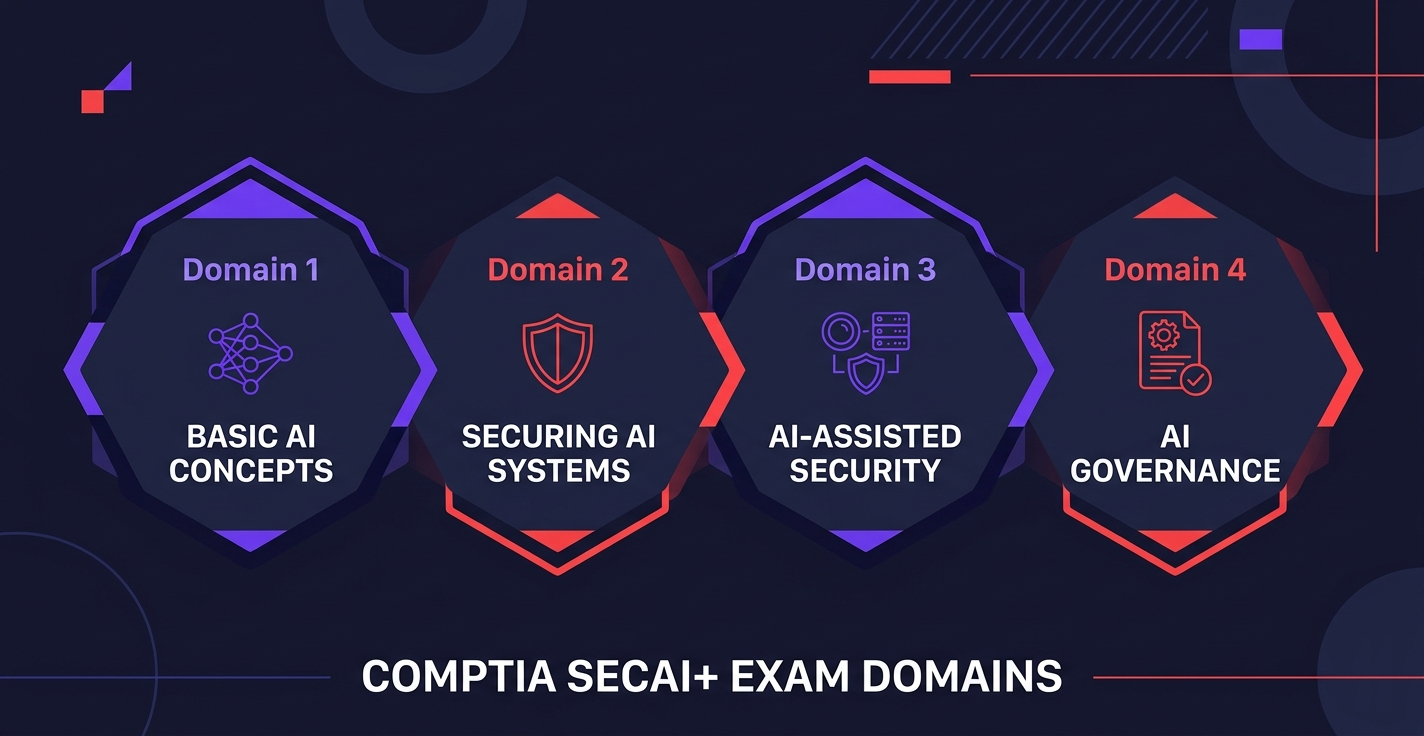
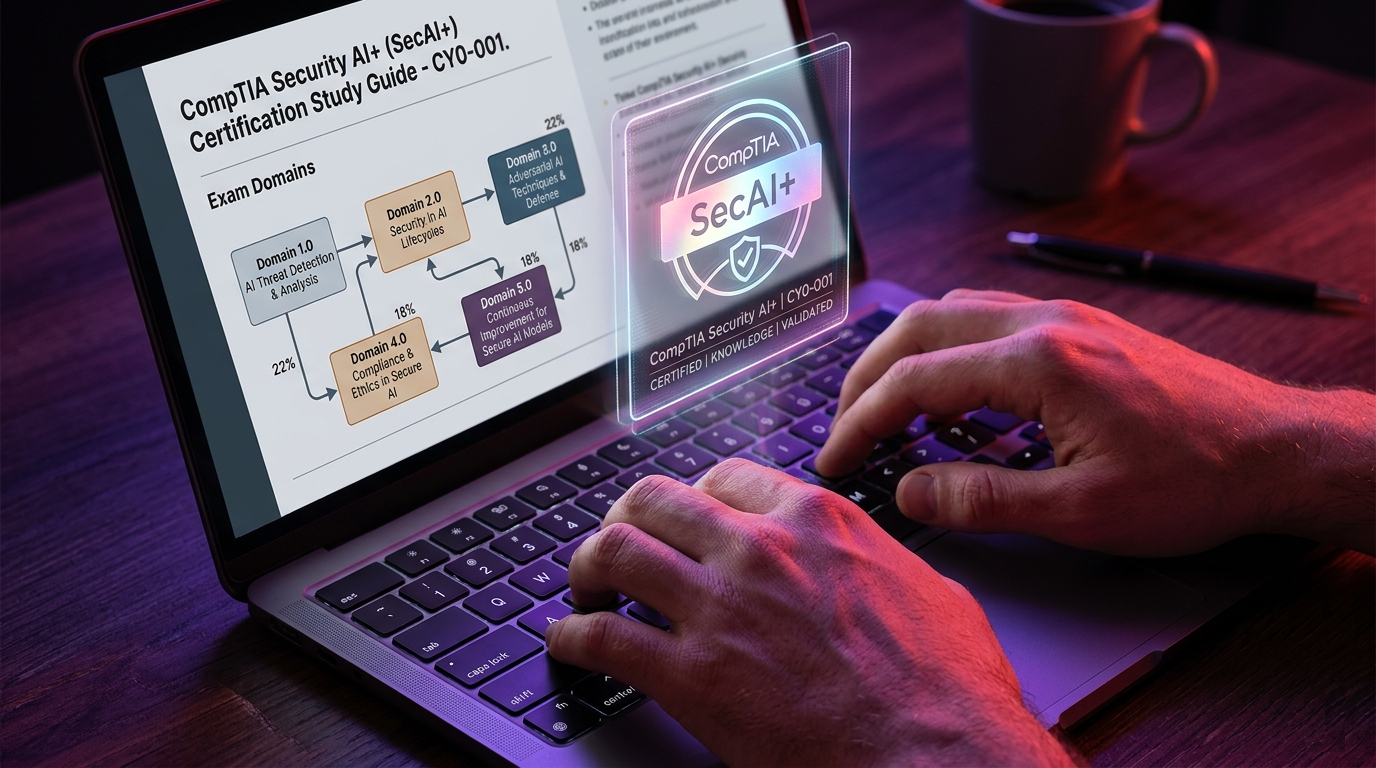
CompTIA SecAI+ is a different conversation entirely. Launched in 2025 with exam code CY0-001, it is described as the first vendor-neutral certification sitting at the intersection of artificial intelligence and cybersecurity. It is not about learning a specific AI platform or tool. It is about understanding how AI systems introduce new attack surfaces, how to defend those systems, how to use AI as a security tool within the SOC, and how governance and compliance frameworks apply to AI deployments on a global scale.
The four domains of SecAI+ are basic AI concepts related to cybersecurity at 17 percent, securing AI systems at 40 percent, AI-assisted security at 24 percent, and AI governance, risk, and compliance at 19 percent. The heaviest domain, securing AI systems, covers threat modeling for AI, adversarial attacks like prompt injection and model poisoning, guardrails, access controls, and monitoring. If you have ever wondered who is responsible for making sure that the large language models and generative AI tools inside an enterprise do not become a liability, SecAI+ is the certification built for that professional.
The career paths that benefit most from SecAI+ include AI security architects, MLSecOps engineers, AI risk analysts, AI governance specialists, and senior SOC analysts working in organizations where AI tools are already embedded in the daily workflow. According to course materials, AI and machine learning security job postings grew 112 percent between 2022 and 2025, more than double the growth rate of cloud security. The market is signaling clearly that the demand for this skill set is real, and the supply of credentialed professionals has not kept pace. AI security roles are also commanding a 15 to 30 percent salary premium over comparable traditional security positions.
So which one is right for you? If your role is grounded in security operations and your daily work involves investigating threats, managing vulnerabilities, and responding to incidents inside a SOC, CySA+ is the logical next move. If you are a security professional whose organization is deploying or integrating AI tools, or if you want to position yourself for the emerging specialty of AI security architecture and governance, SecAI+ is built for exactly that transition. The good news is that they are not mutually exclusive. CySA+ builds the operational foundation that makes SecAI+ content land with more depth. Many professionals will pursue both over the course of their careers.
Talk to you next week!